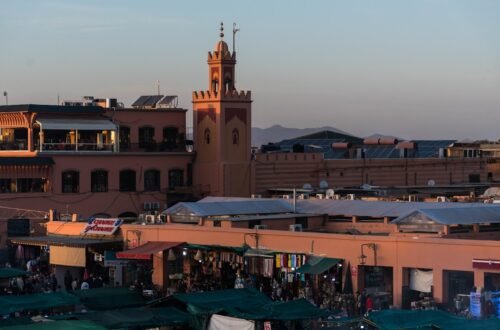
The Ancient Silk Road was not merely a single route but a complex network of trade paths that connected the East and West, facilitating the exchange of goods, culture, and ideas. Spanning thousands of miles, this intricate web of trade routes emerged during the Han Dynasty around 130 BCE and flourished for centuries, reaching its zenith during the Tang and Mongol empires. The name “Silk Road” itself is derived from the lucrative silk trade that was one of the primary commodities exchanged along these routes.
However, the Silk Road was not limited to silk; it also facilitated the trade of spices, precious metals, textiles, and even ideas such as religion and technology. The significance of the Silk Road extends beyond mere commerce; it served as a conduit for cultural exchange, allowing for the mingling of diverse civilizations. From the bustling markets of Chang’an (modern-day Xi’an) to the vibrant bazaars of Constantinople, merchants, travelers, and scholars traversed these routes, sharing knowledge and fostering connections between distant lands.
The Silk Road’s impact on global history is profound, as it laid the groundwork for future trade networks and cultural interactions that would shape the world as we know it today.
Key Takeaways
- The Ancient Silk Road was a network of trade routes connecting the East and West, facilitating the exchange of goods, ideas, and cultures.
- Uzbekistan’s Silk Road cities, including Samarkand, Bukhara, and Khiva, played a crucial role in the history of the Silk Road, serving as major trading hubs and centers of cultural exchange.
- Samarkand, known as the Jewel of the Silk Road, is home to stunning architectural wonders such as the Registan and the Bibi-Khanym Mosque.
- Bukhara is a living museum of Silk Road history, with well-preserved ancient buildings, bustling bazaars, and a rich cultural heritage.
- Khiva, a well-preserved Silk Road oasis, offers visitors a glimpse into the past with its ancient city walls, mosques, and madrasas.
The History of Uzbekistan’s Silk Road Cities
Uzbekistan occupies a central position along the ancient Silk Road, making it a pivotal hub for trade and cultural exchange. The cities of Samarkand, Bukhara, and Khiva emerged as key players in this historical narrative, each contributing uniquely to the rich tapestry of Silk Road history. Samarkand, with its strategic location at the crossroads of various trade routes, became a melting pot of cultures, attracting merchants from China, Persia, India, and beyond.
Its historical significance is underscored by its role as a center for science, art, and architecture during the Timurid Empire in the 14th and 15th centuries. Bukhara, another jewel of Uzbekistan, boasts a history that dates back over two millennia. It was renowned not only for its commercial activities but also as a center of Islamic scholarship and culture.
The city was home to numerous madrasas and mosques that attracted scholars from across the Islamic world. Khiva, while smaller than its counterparts, played a crucial role in the Silk Road trade as well. Its well-preserved architecture and strategic location made it an essential stop for caravans traveling through Central Asia.
Together, these cities encapsulate the essence of Uzbekistan’s historical significance along the Silk Road.
Exploring Samarkand: The Jewel of the Silk Road
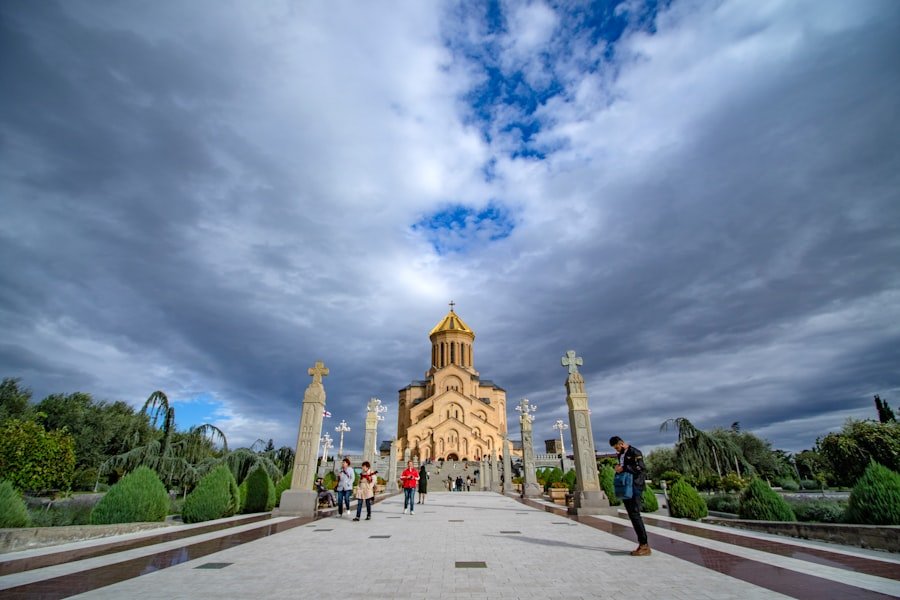
Samarkand is often referred to as the “Jewel of the Silk Road,” a title that reflects its historical grandeur and cultural richness. The city is renowned for its stunning architectural marvels, many of which date back to the Timurid period. The Registan Square, with its three magnificent madrasas—Ulugh Beg Madrasah, Sher-Dor Madrasah, and Tilya-Kori Madrasah—stands as a testament to the city’s historical importance.
Each madrasa features intricate tile work and grand facades that showcase the artistry of Persian architecture. Beyond its architectural splendor, Samarkand is steeped in history. The city has been a witness to numerous empires and conquests, from Alexander the Great to Genghis Khan.
The Shah-i-Zinda necropolis is another highlight, where visitors can explore a series of mausoleums adorned with exquisite tile mosaics. This sacred site not only serves as a resting place for notable figures but also reflects the city’s role as a spiritual center along the Silk Road. The blend of cultures and traditions in Samarkand creates an atmosphere that is both enchanting and educational for travelers seeking to understand its historical significance.
Bukhara: A Living Museum of Silk Road History
| Aspect | Metric |
|---|---|
| Location | Uzbekistan |
| Historical Significance | One of the oldest cities on the Silk Road |
| Architecture | Well-preserved medieval buildings |
| Cultural Heritage | UNESCO World Heritage Site |
| Attractions | Kalyan Minaret, Ark of Bukhara, Lyab-i Hauz |
Bukhara is often described as a living museum due to its well-preserved architecture and rich cultural heritage. The city boasts over 140 architectural monuments that date back to various periods in history, making it an invaluable repository of Silk Road heritage. The Ark Fortress, which served as a royal residence for centuries, stands as a symbol of Bukhara’s historical importance.
Visitors can explore its vast grounds and learn about the city’s role as a political center during different dynasties. The historic center of Bukhara is a UNESCO World Heritage site, showcasing an array of stunning mosques, madrasas, and caravanserais that once catered to weary travelers along the Silk Road. The Kalyan Minaret, often referred to as the “Tower of Death,” is an iconic structure that has stood for centuries, offering breathtaking views of the city from its summit.
The city’s vibrant bazaars continue to thrive today, where artisans sell traditional crafts such as silk carpets and ceramics. This living connection to its past allows visitors to experience Bukhara not just as a historical site but as a vibrant community that continues to celebrate its Silk Road legacy.
Khiva: A Well-Preserved Silk Road Oasis
Khiva is often regarded as one of the best-preserved cities along the Silk Road, with its ancient walls and stunning architecture providing a glimpse into its storied past. The city is divided into two parts: Itchan Kala, the inner town surrounded by formidable walls, and Dishan Kala, the outer town that has seen more modern development. Itchan Kala is home to numerous historical monuments that reflect Khiva’s significance as a trading hub during the Silk Road era.
One of Khiva’s most remarkable features is its collection of minarets and madrasas that showcase intricate tile work and unique architectural styles. The Kalta Minor Minaret stands out with its vibrant blue tiles and unfinished height, symbolizing both ambition and artistic endeavor. The Kunya-Ark Citadel served as the residence for Khiva’s rulers and offers insights into the city’s governance during its peak.
Walking through Khiva feels like stepping back in time; narrow alleyways lead to bustling markets where traditional crafts are still practiced today. This preservation of history allows visitors to immerse themselves in the atmosphere of a bygone era while appreciating Khiva’s role in the broader narrative of the Silk Road.
Tashkent: The Modern Gateway to Uzbekistan’s Silk Road Cities
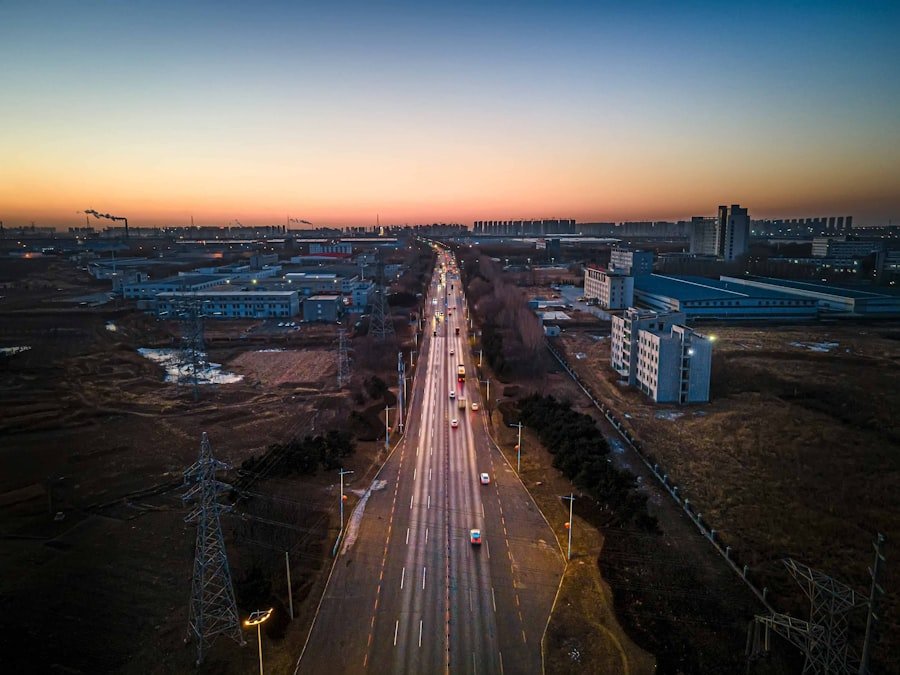
Tashkent serves as Uzbekistan’s capital and acts as a modern gateway to the country’s rich Silk Road heritage. While it may not possess the same historical allure as Samarkand or Bukhara, Tashkent offers a unique blend of contemporary urban life and historical significance. The city has undergone significant modernization in recent years while still preserving key historical sites such as the Khast Imam Complex, which houses one of the oldest copies of the Quran.
The bustling Chorsu Bazaar is another highlight for visitors seeking an authentic experience. Here, one can find an array of local produce, spices, textiles, and handicrafts that reflect Uzbekistan’s diverse culture. Tashkent’s extensive metro system features stations adorned with beautiful mosaics and artwork that pay homage to Uzbekistan’s history and culture.
As travelers embark on their journey through Uzbekistan’s Silk Road cities, Tashkent serves as an essential starting point where they can acclimate to local customs while enjoying modern amenities.
The Legacy of the Silk Road in Uzbekistan Today
The legacy of the Silk Road continues to resonate throughout Uzbekistan today, influencing various aspects of life from culture to cuisine. Traditional crafts such as carpet weaving and ceramics remain integral to Uzbek identity, with artisans passing down their skills through generations. Festivals celebrating this rich heritage attract both locals and tourists alike, showcasing traditional music, dance, and culinary delights that have roots in Silk Road traditions.
Moreover, Uzbekistan’s commitment to preserving its historical sites ensures that future generations will continue to appreciate their cultural heritage. Restoration projects in cities like Samarkand and Bukhara aim to maintain their architectural integrity while promoting tourism that respects local customs. The revival of interest in Silk Road history has also led to increased academic research and international collaborations aimed at understanding this complex network’s impact on global history.
Tips for Traveling to Uzbekistan’s Silk Road Cities
Traveling to Uzbekistan’s Silk Road cities offers an enriching experience filled with history and culture; however, preparation is key to making the most out of your journey. First and foremost, familiarize yourself with local customs and etiquette; understanding basic phrases in Uzbek or Russian can go a long way in enhancing interactions with locals. Dress modestly when visiting religious sites; women should consider wearing scarves while men should avoid shorts in sacred spaces.
When planning your itinerary, allocate sufficient time for each city; while Samarkand and Bukhara are must-visit destinations due to their historical significance, Khiva offers a unique charm that should not be overlooked. Consider traveling by train between cities; Uzbekistan’s rail network is efficient and provides scenic views of the countryside. Lastly, indulge in local cuisine; dishes like plov (a rice dish with meat and vegetables) or samsa (savory pastries) are not only delicious but also reflect Uzbekistan’s culinary heritage shaped by centuries of trade along the Silk Road.
In conclusion, exploring Uzbekistan’s Silk Road cities provides an unparalleled opportunity to delve into a rich tapestry woven from centuries of history, culture, and human connection. Each city offers unique experiences that contribute to understanding this ancient network’s enduring legacy in shaping civilizations across continents.
FAQs
What is the Silk Road?
The Silk Road was a network of trade routes that connected the East and West, facilitating the exchange of goods, ideas, and cultures between different civilizations.
Where are the ancient Silk Road cities located in Uzbekistan?
The ancient Silk Road cities in Uzbekistan are located along the historic trade route and include Samarkand, Bukhara, and Khiva.
What are some notable landmarks in Samarkand?
Samarkand is home to the famous Registan Square, the Bibi-Khanym Mosque, and the Gur-e Amir mausoleum, which are all UNESCO World Heritage Sites.
What are some highlights of Bukhara?
Bukhara is known for its well-preserved historic center, including the Kalon Minaret, the Ark of Bukhara, and the Lyab-i Hauz complex.
What can visitors expect to see in Khiva?
Khiva is characterized by its ancient city walls, narrow streets, and well-preserved historic buildings such as the Kalta Minor minaret and the Tash Hauli Palace.
How can tourists access the ancient Silk Road cities in Uzbekistan?
Tourists can access the ancient Silk Road cities in Uzbekistan by flying into major cities such as Tashkent and then traveling to Samarkand, Bukhara, and Khiva by train, bus, or car.